



Explore real-world challenges from environmental monitoring to climate risk analysis. Spatial data and GIS help us understand patterns, places, and change in the world around us. These programs and courses introduce practical tools and techniques for mapping, spatial analysis, emerging technologies and more.
Spatial Data and GIS programs
We offer programs that focus on developing your knowledge in spatial data analysis, LiDAR and mapping skills:
Discover the potential of spatial thinking
With a focus on the fundamentals, our six-week GIS Skills and Mapping micro-certificate prepares you for in-field employment. Designed for those with little or no prior geomatics experience, you’ll gain skills in open-source software like QGIS, Google Earth and the Gaia app.
Zoom in on climate change mitigation
The Micro-certificate in LiDAR Fundamentals for Climate Change Risk Analysis will equip you to use and analyze LiDAR data. Using remote sensing survey data via LiDAR, you will gain the knowledge and skills to look deeper into climate change scenarios such as wildfires, floods, coastal change or urban heat effects.
Soar to new perspectives with drones
Drone technology is an emerging skill set in many Earth monitoring fields. The Mapping with Drones program prepares you with the essential skills, methods and best practices needed to use emerging drone and GIS-technology for low-level aerial land survey, data collection or digital mapping.
Discover your path in sustainability
Whether you're a current student looking to deepen your knowledge or a professional looking to upskill and launch a new career, this free info session is your opportunity to learn more, get your questions answered, and see if our programs are the right fit for you!
Next info session: Oct. 28
Spatial Data and GIS courses
Courses under this topic can be taken individually. This allows you to take courses that spark an interest without having to commit to completing a full credential.
- Epidemiological Statistics
- Health Services Program Monitoring and Evaluation
- Info Session: Discover Your Path in Sustainability at UVic
- Longitudinal Analysis and Multi-level Modelling of Population Health Data
- Mapping with Drones 1
- Mapping with Drones 2
- Population Health and Geographic Information Systems (GIS)
- Spatial Epidemiology and Outbreak Detection
- Working with Administrative Data

GIS Skills and Mapping
GIS technology is increasingly integrated into various industries to enhance spatial data analysis, decision-making, and planning capabilities. The program provides hands-on training in open-source software like QGIS, Google Earth and the Gaia app. You will learn to create custom maps, analyze spatial data, and answer complex human and environmental questions.
View program

LiDAR Fundamentals for Climate Change Risk Analysis
LiDAR is a remote sensing survey method that facilitates 3D mapping of the Earth’s surface including urban and rural topography. This program equips learners to use and analyze LiDAR data for developing critical information towards mitigating the impacts of climate change.
View program

Mapping with Drones
Do you want to take your connection to our planet to new heights? Flying drones gives you the chance to navigate the Earth from above and reach new perspectives like never before.
View program

Population Health Data Analysis
The online Population Health Data Analysis program is designed for those who are seeking education and professional development in advanced population health analysis. The goal of the program is to provide participants with strong foundational knowledge and data analysis skills that can support their work within the field of population health.
View program

Learn Geographic Information Systems (GIS) skills and mapping techniques with expert instructor Jessica Neal through UVic Continuing Studies' micro-certificate program. Transform complex data into actionable insights for environmental science, urban planning, climate response, and healthcare applications. With over 10 years of GIS teaching experience, Jessica guides students through hands-on projects that build portfolio-ready skills for high-demand careers in government, environmental consulting, and spatial data science.
Read Story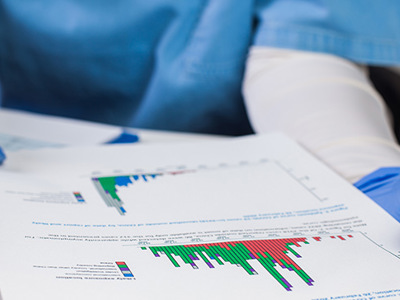
Continuing Studies offers courses in epidemiology and health data analysis, such as the Epidemiological Statistics course, as part of the Population Health Data Analysis program. These courses equip students with skills to analyze health data, uncover trends, and address societal health challenges through advanced methodological tools and techniques.
Read Story
The Canadian Longitudinal Study on Aging gathers extensive health data to understand aging. Enroll in this course to learn advanced analysis skills for impactful health insights.
Read Story
You've launched your career and now it’s time to sharpen your skills. But how can you expand your work horizons without sacrificing a manageable work/life balance?
Read Story
Here is Cathy's story… Cathy is an experienced administrator who works in a social services organization. She's been involved in evaluation projects in the past but was recently asked to take the lead on a new program evaluation. Cathy confided in a colleague. "Honestly, I’m feeling really overwhelmed," she said. "With a six-month deadline looming, I know I have to plan my time wisely, and I’m not sure exactly where to start!"
Read Story
We live in a data filled world. In recent years, many of us have become increasingly aware of this fact and cautious about how our data is being protected and used. But do we really know the value of this data for improving our health and social well-being?
Read Story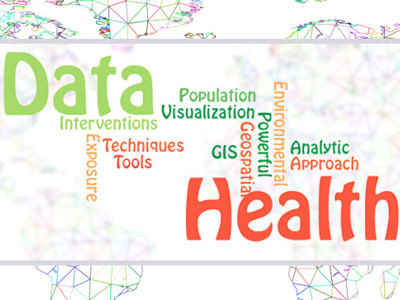
In our changing world, disease incidence and environmental risk are an ever-present topic we are all aware of. It’s important to understand the association between environmental exposures and health outcomes.
Read Story
By knowing more about how loneliness is associated with health conditions and morbidity, further work can be done to address questions of concern for both patients and the practitioners who serve them.
Read Story
Data has never played a more important role in addressing health outcomes. Regardless of their background, the individuals that enroll in the PHDA program’s geospatial courses are looking to enhance their existing skillset and bring value to their current and future work.
Read Story
The fight against COVID-19 is far from over, but in tackling this global pandemic, researchers, governments, and health organizations worldwide have made huge strides in sharing knowledge and combining expertise.
Read Story
Wenti Xu completed the Professional Specialization Certificate in Population Health Data Analysis. Read about how she plans to apply her new skills in her work.
Read Story
According to the most recent report by the World Economic Forum, the top job roles demonstrating increasing demand across all industries are data analysts and data scientists.
Read Story
Frederick recently completed the Professional Specialization Certificate in Population Health Data Analysis and now works as a Project Analyst for First Nations Health Authority.
Read Story
How many times have you turned to a map to find the closest park, best restaurant or most desirable housing development? Whenever we use a map in this way, we are essentially analyzing its contents to help us make a decision.
Read Story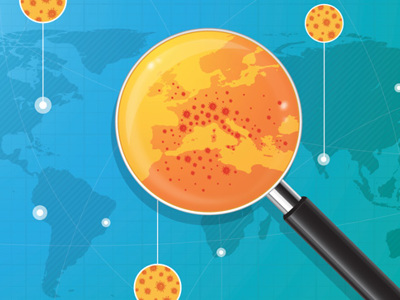
Health Canada’s COVID-19 epidemiology updates provide vital information on how Canada is managing the epidemic on both a federal and provincial level.
Read Story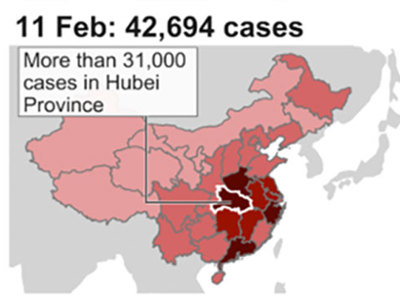
The ability to use GIS and epidemiology to address emerging population health issues in our society are key components of the Population Health Data Analysis (PHDA) program.
Read StoryOur society generates exponential amounts of information every day. Big data now fuels the engines of change and influence, but how can we harness this power to make meaningful social change?
Read StoryAccording to The Canadian Longitudinal Study on Aging (CLSA),“for the first time in our history the number of Canadians over 65 has exceeded the number of those aged 14 and under.
Read StoryData now fuels decision-making in almost every sector of our society. As a result, interest in data-intensive science is growing rapidly as opportunities to explore this expanding resource source abound.
Read Story
Expanding your tools and techniques to improve your practice Interested in adding more tools to your improvement toolbox? There are many ways to support the ongoing management and improvement of health services and programs.
Read Story
Seeing the big picture in the maze of complex and often messy data requires a unique set of skills. To be successful, researchers need to hone their role as ‘data detectives’ to effectively use and analyze administrative data.
Read Story
Geospatial information (GI) identifies the geographic location of natural and built objects; but when combined with other forms of data, it can provide extremely valuable information for a myriad of business, government, academic educational or consumer applications.
Read Story
Adele Balram is a Database Analyst with the New Brunswick Institute for Research, Data, and Training.
Read Story
According to a recent 2016 Health Status Report, 90 percent of Canadians indicated they have good to excellent health. That’s very promising news, especially when you consider that Canada’s average life expectancy of 82 years makes us one of the healthiest nations in the world. But before we get too comfortable, maybe we should check out the whole story.
Read Story
The Professional Specialization Certificate in Population Health Data Analysis will give you the skills and knowledge you need to get ahead in your career. Complete four courses to earn a certificate conferred by the University of Victoria or take up to two courses for professional development.
Read Story
You’ve achieved success in your academic degree and launched your career. Short term, professional specialized training offers the theory and the practice that you need to move your career goals forward.
Read Story
By Anders Erickson, Instructor Access to timely and quality health care is an important determinant of health and well-being.
Read Story
Planning a research project has many key components, from formulating a research question and reviewing available data sources to preparing and analyzing the data. Making your way successfully through this process requires the knowledge and skill to ask the right questions and apply the appropriate statistical or analytic techniques. Many individuals working in the area of population and public health, know they cannot rely on a static set of skills to support the challenges of this work.
Read Story
Have you ever wanted to evaluate a program or project but didn’t know where to start? In an era of accountability it can be overwhelming to know how best to evaluate and demonstrate the value of your work.
Read Story
I learned about the PHDA program while pursuing work at the BC Cancer Agency. It was good timing, as I wasn’t sure about my professional development plans for that year.
Read Story