


Lessons in uniting Canada
By instructor Nigel Atkin
When I first moved permanently to British Columbia, I was initially impressed by its size and then its diversity of environments and its peoples.
I told my friends in Ontario and the United States that:
- geographically one could fit the entire states of California, Washington, Oregon, and Idaho into BC’s borders and still have room leftover for parts of Nevada;
- Prince George was in the centre of the province, that its Pacific Ocean coastline was “maritime” in nature, where traditional ocean-going canoes once linked nations in and along the coast, and how today transportation is available by numerous ferries, tugs, barges, yachts, and other vessels;
- BC’s biodiversity in modern agriculture ranged in concert with its vast terrain, its respective plains, valleys, hills and hollows resident in its Jungian Animas nature, unique in North America from lake and ocean shores to its glacial peaks and beyond, that in it grew abundant specialty crops, unique medicines, and other flora.
Where there are some 600 First Nations in Canada, around 200 of those original tribes, the administrative bands in British Columbia, form a vast network of “values,” complementing a variety of language groups and respective dialects.
I was told by one Elder that the varieties of original people in the province were so distinct that to generalize about the people would be as great a mistake as assuming the Chinese were closely akin to the Irish in language and culture.

Hitchhiking to the Yukon in those days, one was encouraged to learn “Canada” through coast-to-coast youth hostels, utilizing the national network of hockey arenas for safe and secure nights to augment personal journeys.
Yukon larger than Texas
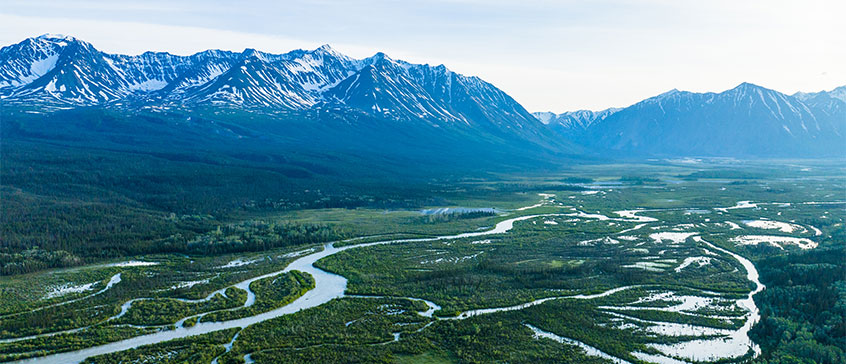
The Yukon sits atop British Columbia; I still relay to friends that it is larger than Texas and buttresses BC, Alaska, the Arctic Ocean, and the Northwest Territories. The vast wilderness, distances, and the native and settler culture became ingrained in positive memories through my work with Indigenous people in Carmacks, Pelly, Stewart, Whitehorse, and Dawson City, and in my time fighting forest fires in the territory or being a reporter/photographer for the iconic Whitehorse Star newspaper.
Hitchhiking to the Yukon in those days, one was encouraged to learn “Canada” through coast-to-coast youth hostels, utilizing the national network of hockey arenas for safe and secure nights to augment personal journeys.
Having young people learn about this country by experiencing it firsthand seemed national policy; those protecting it, predominantly the Royal Canadian Mounted Police, were seen as helpful—directing and assisting travellers to hostels and otherwise forwarding them on their journey.
Other police forces, municipal and provincial, the Ontario Provincial Police for instance, were noted for expediting young travellers on their way. When many hundred hitchhikers were bottlenecked in Wawa, North of Lake Superior, I recall OPP helicopters ferried more than a few to distant Thunder Bay.
Shameless propaganda
Uniting Canada is not a new phenomenon. The ongoing flow of human beings requires that ideas, history, and purpose be regenerated in our young people. Educating generations, through whatever means—available technology or lived experience, is essential to maintaining provincial and national character, culture, even sovereignty.
In earlier times, when Canada was faced with the realities of World War II, there were initiatives to teach citizens about our rich heritage, industries, sports, and various ways of life—from fishing and farming, mining, forestry, and our emerging global presence in manufacturing and commerce.
A decade ago, the National Film Board released a brief documentary for its 75th birthday that examines our effort through film.
In the NFB’s own words:
“This feature documentary examines its own genre that has often been called Canada's national art form. Released in the year of the NFB's 75th birthday, Shameless Propaganda is filmmaker Robert Lower's take on the boldest and most compelling propaganda effort in our history (1939 to 1945), in which founding NFB Commissioner John Grierson saw the documentary as a "hammer to shape society."
“All 500 of the films produced by the NFB until 1945 are distilled there for the essence of their message to Canadians. Using only those films and still-photos from that era, Lower recreates the picture of Canada they gave us and looks in it for the Canada we know today. What he finds is by turns enlightening, entertaining, and unexpectedly disturbing.”
It is one of the many films I encourage my students to view in the Evolution of Public Relations course in the University of Victoria’s Diploma in Public Relations program. It is available online through the NFB and is only 1 hour 12 minutes long.
Education, personal experiences, and lifelong study are obligatory to national and personal security. Our classroom now is global and there are lessons to be learned in creating unity.
Although dated in what might be considered political correctness, it provides an understanding of what is needed in this or a different form to reflect on what we are today in British Columbia and Canada.
History as a resource
History is a resource. To ignore it is folly. Our own history and that of global allies and others is vital to our understanding of consequences and in planning and reinforcing for our respective futures.
Education, personal experiences, and lifelong study are obligatory to national and personal security. Our classroom now is global and there are lessons to be learned in creating unity.
In more recent times, the history and example of the European Union is a good example of providing ideas for information and experience for people learning more about their opportunities in the union of some 28 countries.
Some historical background
Grierson said, “Throughout the 1990s, the 'single market' idea allowed easier trade, more citizen interaction on issues such as the environment and security, and easier travel through the various countries."
Even though the countries of Europe had various treaties in place prior to the early 1990s, the ‘90s are generally recognized as the period when the modern day European Union arose due to the Treaty of Maastricht on the European Union—signed on Feb. 7, 1992, and put into action Nov. 1, 1993.
The Treaty of Maastricht identified five goals designed to unify Europe in more ways than economically:
- To strengthen the democratic governing of participating nations
- To improve the efficiency of the nations
- To establish economic and financial unification
- To develop the "community social dimension"
- To establish a security policy for involved nations
Strategically promoting travel
Ryanair was a modest airline founded in 1985, often struggling to find its airspace and corporate footing in the early days. Because of the need to unify unique countries and the common market, strategies were implemented to make citizens much more aware of each other.
Ryanair’s adoption of the low-cost model in the 1990s reshaped the industry, making air travel accessible to millions. The airline’s aggressive low-pricing strategies, no-frills services, and ability to adapt to market demands allowed it to thrive in a fiercely competitive environment, to investor-and-European benefit.
History can often be a cruel reflection of our past, in personal and national reflection, but the best of us learn from it and use it to guide us in unifying actions to promote a promising future . . . at home in British Columbia and in North America and the World.
Nigel is the founding member and a long-standing instructor of the Public Relations diploma program.
This article is featured in the 2025 winter edition of The Scrivener. The Scrivener is the tri-annual magazine of the BC Notaries Association that publishes articles about points of law and the notary profession.

- Posted January 29, 2026
RELATED TOPICS: Public Relations