


Why data visualization skills apply to every industry

by Portia Yip, Marketing Services
Data is more than just numbers. For over 15 years, Jonah Glass has built a career in business intelligence, data analysis and data visualization, working primarily in the public sector and currently with the Ministry of Finance. Along the way, he has seen tools change, data multiply, and an increased demand for sharing clear insights.
Jonah became an instructor with Continuing Studies at UVic in 2023. He currently teaches courses for new programs such as the Data Analytics certificate, and the Data Storytelling and Visualization micro-certificate. He is passionate about the field because of how it helps us understand complex information so we can use it to make better decisions.
"The field is growing and changing," he describes. "Everyone used to rely heavily on Microsoft Excel and now people are using software like Tableau or Power BI, which have become industry standards."
Even though technology continues to evolve, the main goal of data visualization is constant—helping people see and understand what the data is telling them.
What is data storytelling and visualization?

Everyone used to rely heavily on Microsoft Excel and now people are using software like Tableau or Power BI, which have become industry standards.
—Jonah Glass, instructor
Jonah describes the topic as "a picture is worth a thousand words."
"When it comes to data visualization, we usually have thousands or millions of data points," he explains. "The challenge is turning all of that into a picture that makes it easy for someone to understand."
Effective visualizations do more than display data since they reveal patterns, trends and insights that might otherwise stay hidden. Data often comes from many different sources and covers complex topics, while visualization turns it into a clear narrative that is quicker to understand.
"It's not just about seeing the data, it's about understanding what you should do with that information," Jonah says. "We're trying to turn data into a story that someone can use to make decisions or learn something new."
Tools used to collect or interpret data
These days, data storytelling and visualization is shown through charts, graphs, dashboards, or interactive reports. For example, Jonah likes to compare dashboards to the dashboard in a car.
"People are familiar with that concept," he shares. "Your dashboard tells you when you're out of fuel in a very simple way and it just gives you the information you need."
Well-designed dashboards also allow users to explore data more efficiently (e.g., when organizations track sales performance, monitor website traffic, or find key trends for new strategies).
These tools can appear in many forms, including simple monthly reports to advanced interactive visualizations or infographic-style presentations. Regardless of the format, Jonah notes that the goal is always clarity. "We want information presented in a way that's very easy to interpret."
Skills that apply to every industry
One of the most interesting aspects of data visualization and storytelling is how widely it applies across industries. Over the course of his work and career, Jonah has worked with data in healthcare, finance, energy analysis, consulting, and even sports.
"It's kind of all over the place," he laughs. "Every organization has data and is looking for ways to manage it."
As the amount of information continues to grow, the need for professionals who can interpret that data becomes even more important.
"We're in a world where there's so much more information than we used to have," Jonah explains. "Visualization helps get that information to a point where people can see it and understand it easily."
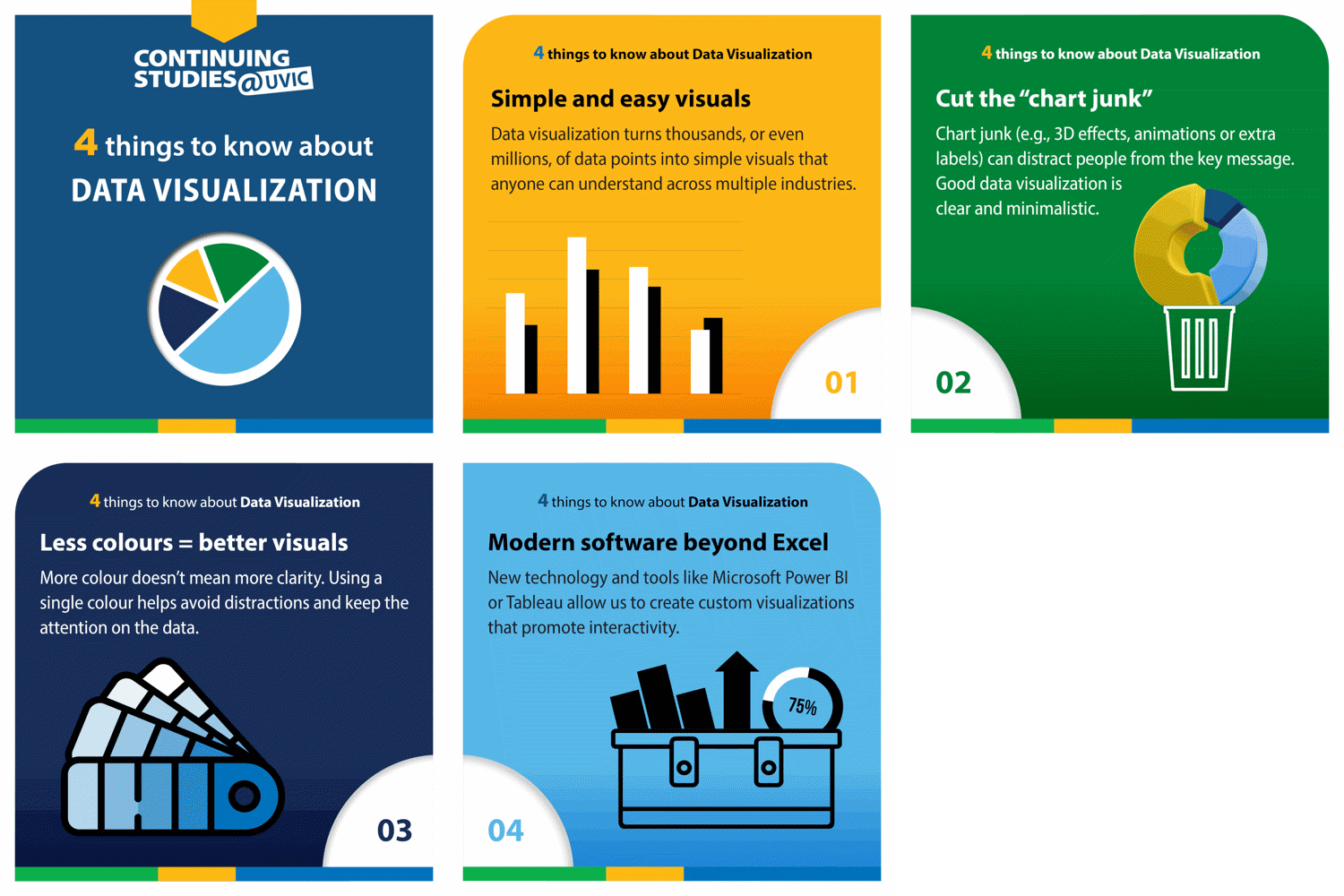
4 Things to Know About Data Visualization
Instructor Jonah Glass breaks down the value of data visualization and the common mistakes that can get in the way.
Want a quick summary?
Download the infographic: 4 Things to Know About Data Visualization
Many participants in his courses are often in marketing, retail, healthcare, or other fields and want to apply data visualization skills within their own industries. Jonah remembers a learner who already had experience with data but wanted to improve their knowledge. Just three months after completing the course, Jonah received a message from them saying they had landed a job with the provincial government.
"It was really validating," Jonah shares. "You never really know where your students are going to end up, so hearing that they are applying what they learned was great."
Trends and advice for data visualizers
Anyone can learn to code charts. What really differentiates people is understanding how to communicate the story behind the data.
—Jonah Glass, instructor
A major trend in the field is the shift toward web-based tools and mobile accessibility. Dashboards and visualizations need to function seamlessly on smartphones and tablets, which involves regular updates and maintenance. At the same time, governments, organizations, and resources like Statistics Canada are making more data publicly available.
"We're seeing more data availability and more exploration," Jonah emphasizes. "That's really where the field is heading."
For students and professionals interested in building data visualization skills, Jonah recommends starting with publicly available datasets. Websites such as open data portals and data science platforms provide a wealth of information that learners can experiment with.
"It's a great way to practice," he says. "Find a topic you're interested in and start visualizing it."
He also suggests reading introductory books like Storytelling with Data: A Data Visualization Guide for Business Professionals by Cole Nussbaumer Knaflic, which helps readers understand the difference between effective and ineffective visualizations.
At its core, data storytelling and visualization is something everyone can benefit from. The goal, or purpose, isn't simply to display numbers, but to make them meaningful.
"Anyone can learn to code charts," says Jonah. "What really differentiates people is understanding how to communicate the story behind the data."
About the instructor

Jonah Glass is currently the director of data analysis and modelling with the BC Ministry of Finance's Policy and Legislation Division, where he is responsible for data science, evaluation, and reporting on new and current taxes and credits across British Columbia.
Originally from Ontario, he holds a master's degree in Health Science, specializing in health informatics and big data, from Ontario Tech University and a Bachelor's Degree in Commerce from Toronto Metropolitan University. He has published a thesis, research articles, and was a recipient of the Queen Elizabeth II Diamond Jubilee Scholarship. He has worked in various levels of government and various public sector organizations in research, data entry, data analysis and data science roles.
Learn more about the Data Analytics certificate and the Data Storytelling and Visualization micro-certificate.
- Posted April 2, 2026
RELATED TOPICS: Data Analytics and Visualization